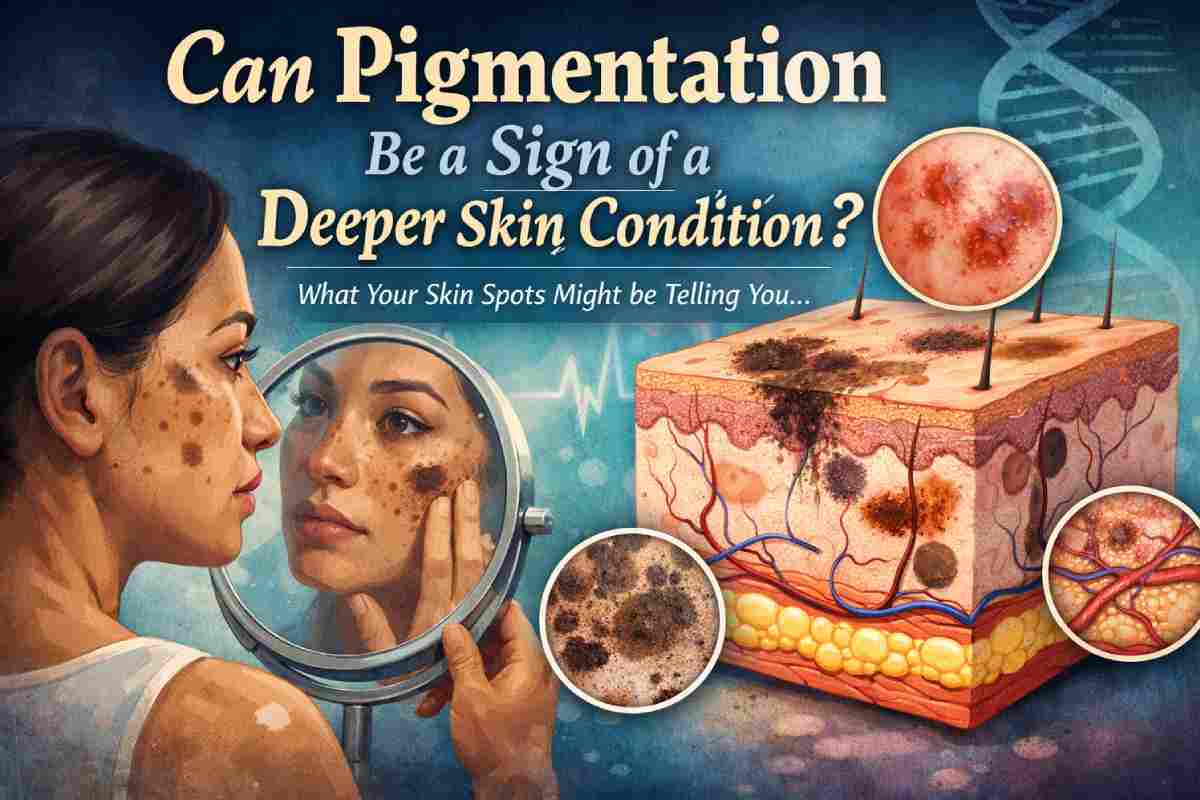
Skin pigmentation is often treated as a cosmetic concern, but medically it can reflect deeper biological activity within the skin. Pigment changes occur when melanocytes, the cells responsible for melanin production, become overactive, unevenly regulated, or stimulated by inflammation, ultraviolet radiation, hormones, or systemic factors. While some dark spots are harmless and superficial, others may signal underlying chronic skin conditions or require closer medical evaluation.
As people age, pigmentation patterns tend to become more complex. Epidermal turnover slows by approximately 20–30% between early adulthood and later decades, cumulative sun exposure alters melanocyte regulation, and the skin becomes more vulnerable to inflammatory triggers. These changes mean that pigmentation appearing later in life may behave differently than pigment seen in younger skin. For individuals considering consultation with a pigmentation doctor Singapore, understanding when pigmentation may reflect a deeper condition can help guide appropriate evaluation and long-term management.
Table of Contents
Why Pigmentation Matters More With Age
Melanin serves a protective function by absorbing ultraviolet radiation and reducing DNA damage in skin cells. In healthy skin, melanocyte activity is balanced and responsive to environmental exposure. With aging, however, melanocyte density gradually declines while remaining cells may become more reactive and uneven in pigment production.
Structural changes in the dermis, including thinning and altered vascular signaling, can make deeper pigment more visible through the skin surface. At the same time, slower cell turnover allows pigment-laden keratinocytes to persist longer, prolonging discoloration even when melanin production normalizes. These biological shifts help explain why pigment disorders often become more persistent and less predictable over time.
Because some pigment changes may overlap with inflammatory, hormonal, or neoplastic processes, accurate assessment becomes increasingly important rather than relying on surface-level treatments alone.
Screening, Prevention, and Early Detection of Pigment Disorders
Not all pigmentation arises from the same mechanism, and visual similarity does not guarantee the same diagnosis. Conditions such as melasma, solar lentigines, post-inflammatory hyperpigmentation, drug-induced pigmentation, and melanocytic lesions may appear similar but have different causes and clinical implications.
Clinical assessment typically includes evaluation of:
- Symmetry and distribution of pigment
- Color characteristics (light brown, dark brown, gray-blue, or mixed)
- History of sun exposure, inflammation, or hormonal changes
- Rate of change in size, color, or border
Dermoscopy may be used to assess pigment networks and vascular patterns beneath the skin surface. In selected cases, Wood’s lamp examination helps determine whether pigment is predominantly epidermal or dermal, which influences both prognosis and treatment response. Epidermal pigment often responds more readily to topical therapy, while dermal pigment tends to be slower to fade.
Early detection is also important because certain pigmented lesions may mimic benign discoloration while requiring further investigation. Rapid changes, irregular borders, or bleeding warrant prompt evaluation.
Daily Care and Lifestyle Factors That Influence Pigmentation
Daily habits strongly influence whether pigmentation stabilizes or progresses. Ultraviolet radiation remains the most significant external trigger for melanocyte activation. Even incidental sun exposure can perpetuate pigment production, particularly in individuals prone to melasma or sun-induced lentigines.
Broad-spectrum sunscreen with an SPF of at least 30 helps limit UVA and UVB exposure. Physical blockers containing zinc oxide or titanium dioxide may also reduce visible light exposure, which has been shown to worsen pigment in some individuals. Consistency in sun protection is typically more impactful than intermittent use of high-SPF products.
Skin barrier health also plays a role. Overuse of exfoliants, harsh cleansers, or inappropriate product layering can induce low-grade inflammation. Inflammatory mediators stimulate melanocytes, increasing the risk of secondary hyperpigmentation. Gentle cleansing, moisturization, and avoiding unnecessary irritation support more stable pigment regulation.
Lifestyle factors such as stress, sleep, and diet may indirectly influence pigment through hormonal and inflammatory pathways. Chronic stress elevates cortisol levels, which can affect immune signaling and melanocyte activity.
Age-Related and Chronic Conditions Linked to Pigment Changes
Pigmentation disorders often coexist with chronic or age-related skin conditions. Melasma is strongly associated with hormonal influences, including pregnancy, oral contraceptive use, and perimenopausal hormonal fluctuations. These internal triggers may persist even after visible pigment improves, contributing to recurrence.
Post-inflammatory hyperpigmentation frequently follows acne, eczema, or cosmetic procedures. In older skin, reduced repair capacity means pigment left behind by inflammation may persist longer and become more resistant to treatment.
Chronic sun damage contributes to solar lentigines, reflecting localized melanocyte overactivity accumulated over years. These lesions often increase in number and intensity with continued ultraviolet exposure. In rare cases, certain pigment changes may be associated with systemic conditions or medication effects, highlighting the importance of proper clinical evaluation.
Prescription Treatments Versus Over-the-Counter Options
Topical products are often the first approach to pigmentation, but treatment strength and mechanism vary. Over-the-counter formulations commonly contain vitamin C derivatives, niacinamide, or retinol at concentrations below 1%. These agents may reduce oxidative stress, inhibit melanin transfer, or modestly increase epidermal turnover. Their effects are typically gradual and best suited for mild or superficial discoloration.
Prescription treatments act more directly on melanocyte activity and pigment synthesis. Hydroquinone at 4% inhibits tyrosinase, the enzyme essential for melanin production, more effectively than the 2% formulations available without prescription. Azelaic acid at 15–20% reduces melanocyte activity while also providing anti-inflammatory benefits. Topical retinoids such as tretinoin (0.025–0.1%) accelerate epidermal turnover and enhance penetration of other pigment-modulating agents.
Clinical improvement with prescription therapy often becomes noticeable after 6–12 weeks of consistent use. However, discontinuation without a maintenance plan may allow pigment to recur, especially if underlying triggers remain unaddressed.
In-Clinic Procedures for Persistent or Complex Pigmentation
Procedural treatments may be considered when pigmentation persists despite topical therapy or shows signs of progression. Chemical peels using glycolic, lactic, or salicylic acid exfoliate pigment-laden keratinocytes and stimulate controlled regeneration. Superficial peels are generally preferred to minimize the risk of post-inflammatory hyperpigmentation.
Laser and light-based therapies target melanin selectively. Q-switched and picosecond lasers deliver short pulses that fragment pigment particles, allowing gradual clearance by the immune system. Intense pulsed light may be used for more diffuse pigmentation, particularly when vascular factors contribute.
These procedures do not eliminate melanocytes. Instead, they reduce existing pigment and interrupt abnormal clustering, which is why they are most effective when combined with ongoing topical therapy and strict photoprotection.
What Our Aesthetic Clinic Says
In my clinical experience, pigmentation is often treated too superficially at first. Many patients focus on fading dark spots without understanding why those spots developed or why they keep returning.
When pigment is persistent, spreading, or changing, it often reflects deeper biological factors such as inflammation, hormonal sensitivity, or cumulative sun damage. Our goal is usually not just to lighten pigment, but to identify the underlying driver and stabilize melanocyte activity over time. Patients who approach pigmentation as a long-term management issue rather than a quick cosmetic fix often achieve more consistent and predictable results.
Putting This Into Practice
- Have pigmented lesions evaluated to determine type and depth
- Use broad-spectrum sun protection consistently
- Avoid unnecessary skin irritation or over-exfoliation
- Follow prescribed topical treatments for the recommended duration
- Monitor changes in pigment over time and attend follow-up reviews
When to Seek Professional Help
- Pigmentation that darkens or spreads over time
- New or changing pigmented lesions
- Pigment associated with itching, bleeding, or irregular borders
- Recurrence after stopping treatment
- Discoloration that does not respond to over-the-counter products
- Concern about whether pigment may reflect a deeper condition
Commonly Asked Questions
Can pigmentation indicate an underlying skin disorder?
Yes. While many pigment changes are benign, some may be associated with inflammatory, hormonal, or chronic skin conditions that require targeted management.
How can I tell if a dark spot is harmless?
Stable, symmetrical spots with uniform color are often benign, but changes in shape, color, or size should be evaluated by a clinician.
Does deeper pigment mean treatment will not work?
Deeper pigment often responds more slowly, but improvement is usually possible with appropriate, sustained therapy.
Are lasers always better than creams for pigmentation?
Not necessarily. Effectiveness depends on pigment depth, diagnosis, and skin type. Topicals and procedures often work best in combination.
How long does it take to know if pigment is stabilizing?
Meaningful assessment usually requires several months, as pigment turnover and response to treatment occur gradually.
Next Steps
Pigmentation can reflect more than surface discoloration, it may signal ongoing biological activity within the skin that benefits from proper evaluation. If dark spots are persistent, changing, or recurrent, consultation with a dermatologist can help clarify whether pigment represents a deeper condition and guide evidence-based strategies aimed at long-term stability rather than temporary fading.